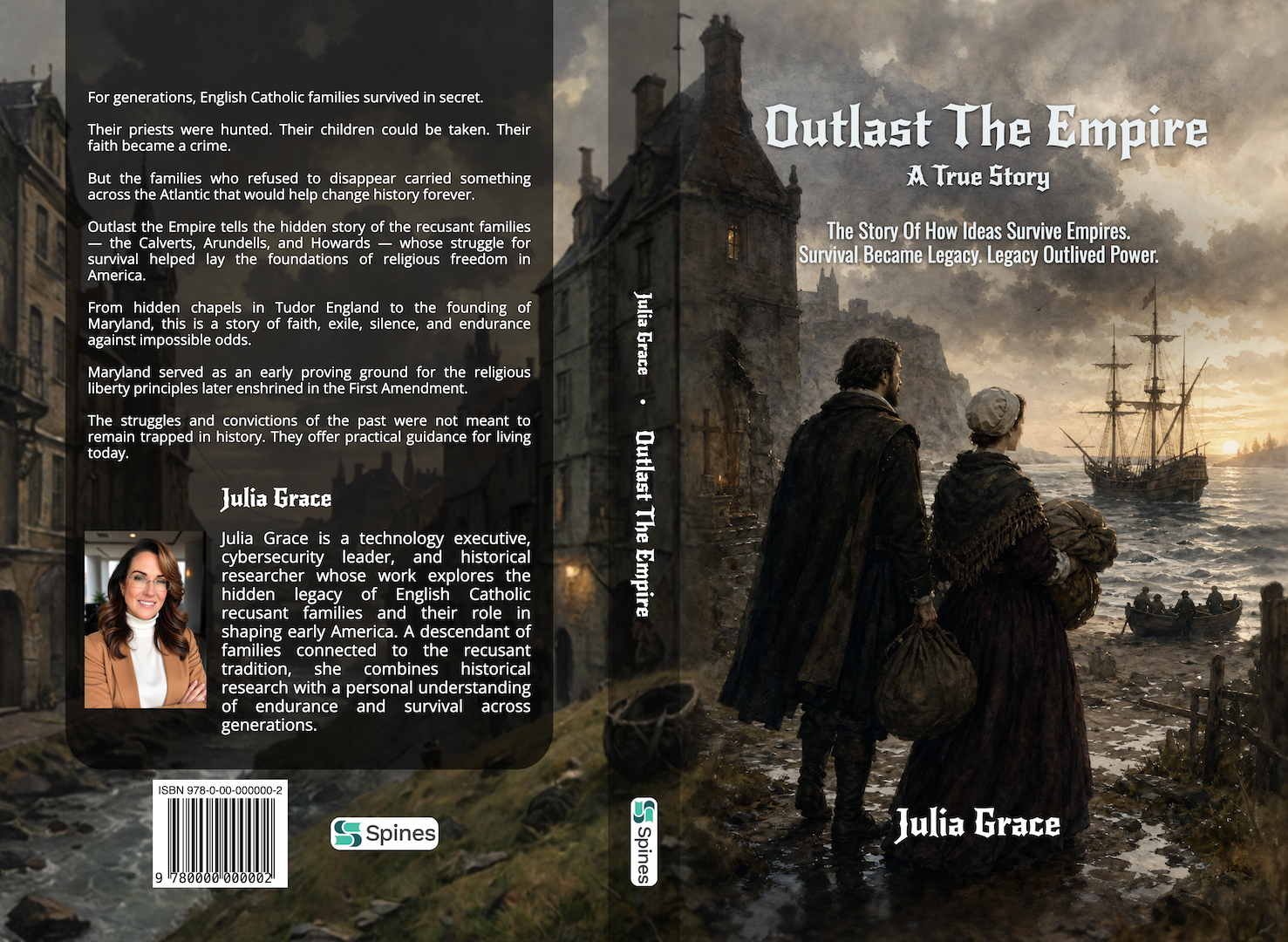
The crossing of the Atlantic was not a single voyage. It was a generation-long migration of people fleeing tyranny. Each ship carried not just passengers, but ideas, beliefs, and the seeds of a nation that would one day stand against empire.
More Than a Crossing
We tend to think of the great Atlantic crossings as events — a ship departs, a ship arrives, history is made. But the migration that built early America was nothing so clean. It unfolded over decades, in dozens of vessels, under conditions that killed a significant portion of those who attempted it. The people who boarded those ships knew the odds. They went anyway. Understanding why requires understanding what they were leaving behind.
What the Manifests Don't Say
The passenger manifests of the 17th century are spare documents. A name, sometimes an age, occasionally a trade. They do not record what a family packed into a single chest, or what they left behind that could not be carried — the graves of parents, the walls of a house built by a grandfather, the particular quality of light on a familiar hillside. They do not record the arguments that preceded the decision to go, or the ones that followed. History preserves the names of ships. It rarely preserves the weight of the choices made aboard them.
The Ark and the Dove
Of all the vessels that made the crossing, the Ark and the Dove hold a particular significance for the story of religious liberty in America. They departed from Gravesend in November 1633, carrying approximately 140 passengers — a mix of Catholic gentry, Protestant settlers, and indentured servants. The voyage took four months. They arrived in the Chesapeake in March 1634, and within weeks had established St. Mary's City, the first settlement in what would become Maryland. What they built there was, for its time, extraordinary: a colony without an established church.
"Every ship that crossed the Atlantic carried the same invisible cargo: the memory of what had been done to people for believing the wrong thing, and the determination that it would not happen again."
Ideas as Cargo
The physical cargo of the 17th-century crossings — tools, seeds, livestock, cloth — has long since perished. What survived was the intellectual cargo: the accumulated experience of people who had lived under religious persecution and thought carefully about what a society without it might look like. The Maryland Toleration Act of 1649 did not emerge from abstract philosophy. It emerged from the specific, lived knowledge of what it cost to be on the wrong side of a state religion. The people who wrote it had paid that cost, or watched their parents pay it.
The Voyage That Never Ends
There is a sense in which the voyage that began on those 17th-century ships has never fully ended. The questions those passengers carried with them — about the proper limits of state power over conscience, about the rights of minorities within a majority culture, about what a society owes to those who built it — are questions that every generation inherits and must answer for itself. The ships are gone. The questions remain. And the people who first asked them, crossing an ocean with everything they owned in a single chest, deserve to be remembered as more than a footnote to a story that was always, in the deepest sense, theirs.
A Note from the Author
This article draws on research from Outlast The Empire, available now. Julia Grace is a technology executive and historical researcher whose work explores the hidden legacy of English Catholic recusant families and their role in shaping early America.